
Permafrost School Day 12: Excursion to the Verkhnevilyuysk Meteorological Station and Soil Profile Research
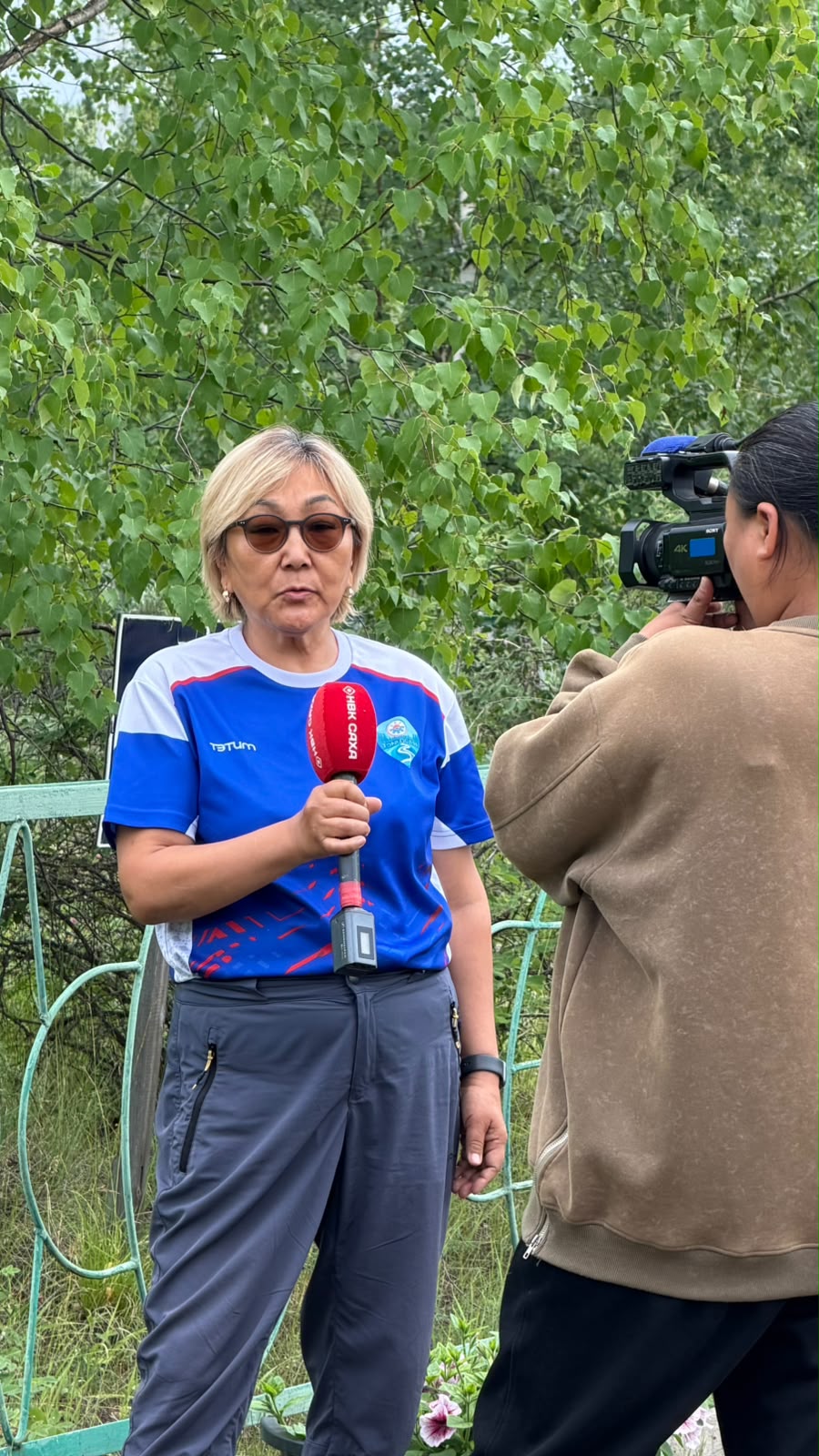
On Day 12, students visited the Verkhnevilyuysk meteorological station celebrating its 90th anniversary, learned about weather observation instruments and software, and conducted their own soil profiling experiment — obtaining 75 measurements of temperature and thermal conductivity at a depth of 120 cm.
Day 12 of the Permafrost School was dedicated to an unforgettable excursion to the Verkhnevilyuysk Meteorological Station — a landmark visit in a special year, as 2026 marks the 90th anniversary of continuous hydrometeorological observations at this station.
The students were welcomed by the head of the meteorological station, Olga Petrovna Alekseyeva, who guided them through the history and significance of the observatory. They learned that the station conducts a wide range of measurements: meteorological, hydrological, and agrometeorological observations, as well as radiation background monitoring and meteorological support for small aviation flights in the region.
A particularly engaging part of the visit was the introduction to the specialised software used by meteorologists in their daily work. Students discovered that all weather observations across the planet are conducted according to a unified time standard and standardised methodologies — a necessary condition for building reliable forecasts, cross-regional comparisons, and long-term climate analysis.
Following the indoor demonstration, the group proceeded to the meteorological observation platform, where Alexandra Petrova, one of the project's tutors, led an interactive tour of the instruments. The students explored the specialised equipment used to measure temperature, precipitation, wind speed, humidity, atmospheric pressure, and solar radiation — gaining a direct understanding of the technical backbone of modern meteorological science.
The most hands-on and scientifically significant part of the day was the soil profiling experiment conducted near the meteorological observation platform. Under the scientific supervision of Vera Vasilyevna Samsonova, the team excavated a test pit (shurft) to a depth of 120 centimetres. Soil samples were collected at every 5 centimetres, and temperature and thermal conductivity were measured at each level. The result: 75 individual data points characterising the soil profile across multiple physical parameters — a rich dataset that the students themselves gathered in the field.
After completing the measurements, the soil was carefully replaced, compacted, and the surface sod was restored — demonstrating the responsible scientific practice of leaving field sites undisturbed after data collection.
Additionally, a permafrost depth measurement was taken at the meteorological platform using a specialized frost gauge. As of 21 July, the active layer thaw depth reached over 150 centimetres (compared to 148 cm recorded the previous day). Measurements taken nearby using a permafrost probe recorded an active layer depth of 143 centimetres — highlighting the micro-scale variability of permafrost dynamics even within a small area.
This day exemplified the Permafrost School's core philosophy: turning every interaction with the natural environment into a rigorous, hands-on scientific experience while cultivating the next generation of Arctic researchers.